
what opus 5 changes if you run agents all day

anthropic shipped opus 5 yesterday. same price as the model it replaces, and the new default on the top consumer plan, so most people running agents are already on it.
the shape of the jump
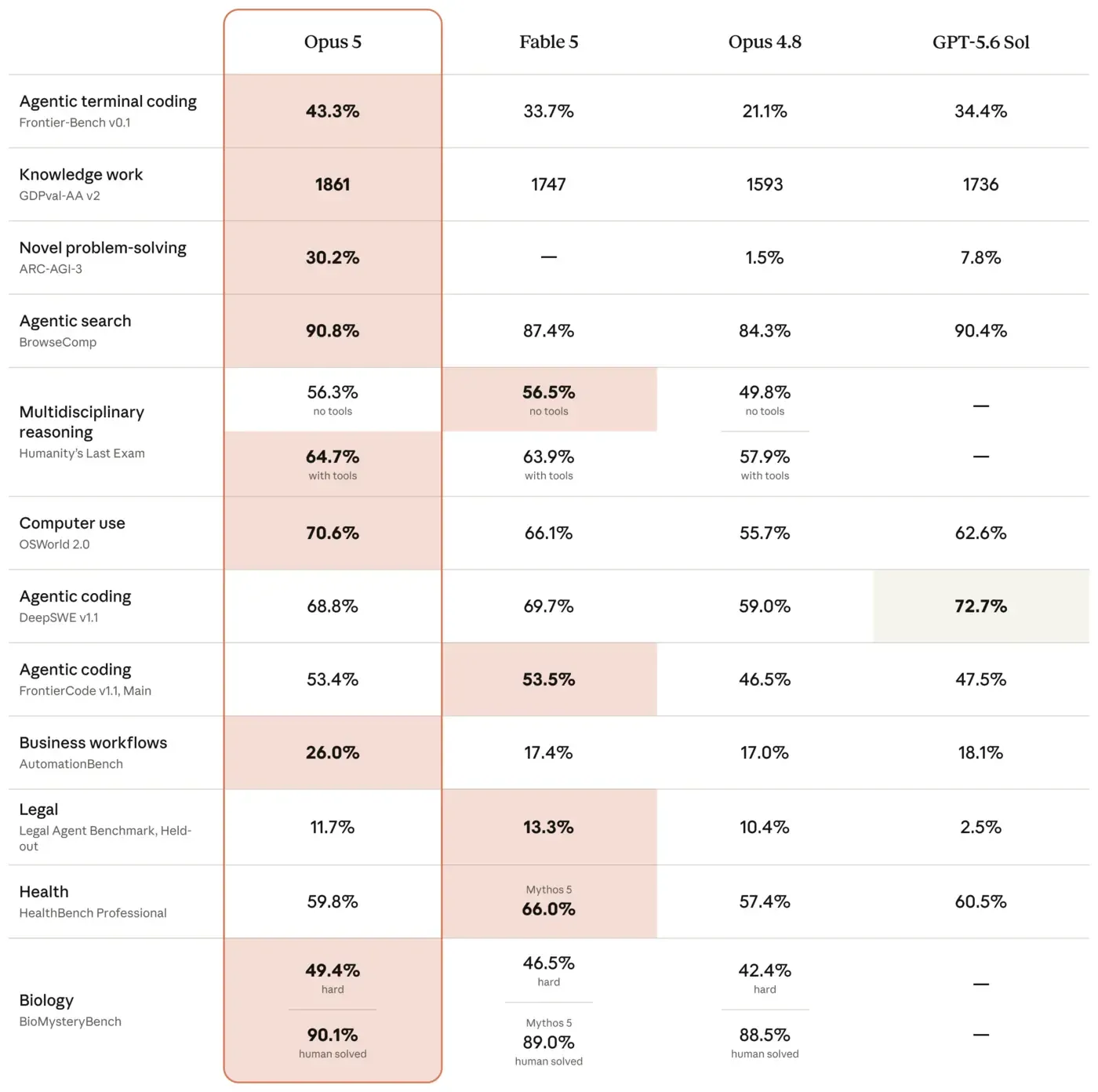
the gains cluster in long-horizon work. agentic terminal coding roughly doubled against the previous opus. computer use and business workflows both moved up. search barely moved, because search was close to finished already.
the tasks that improved are the ones that run a while and can fail in the middle, which is where an always-on agent lives.
it isn’t a sweep. a competitor takes one coding row outright, and the row labelled best at agentic coding sits a hair under fable’s.
what it finds versus what it finishes
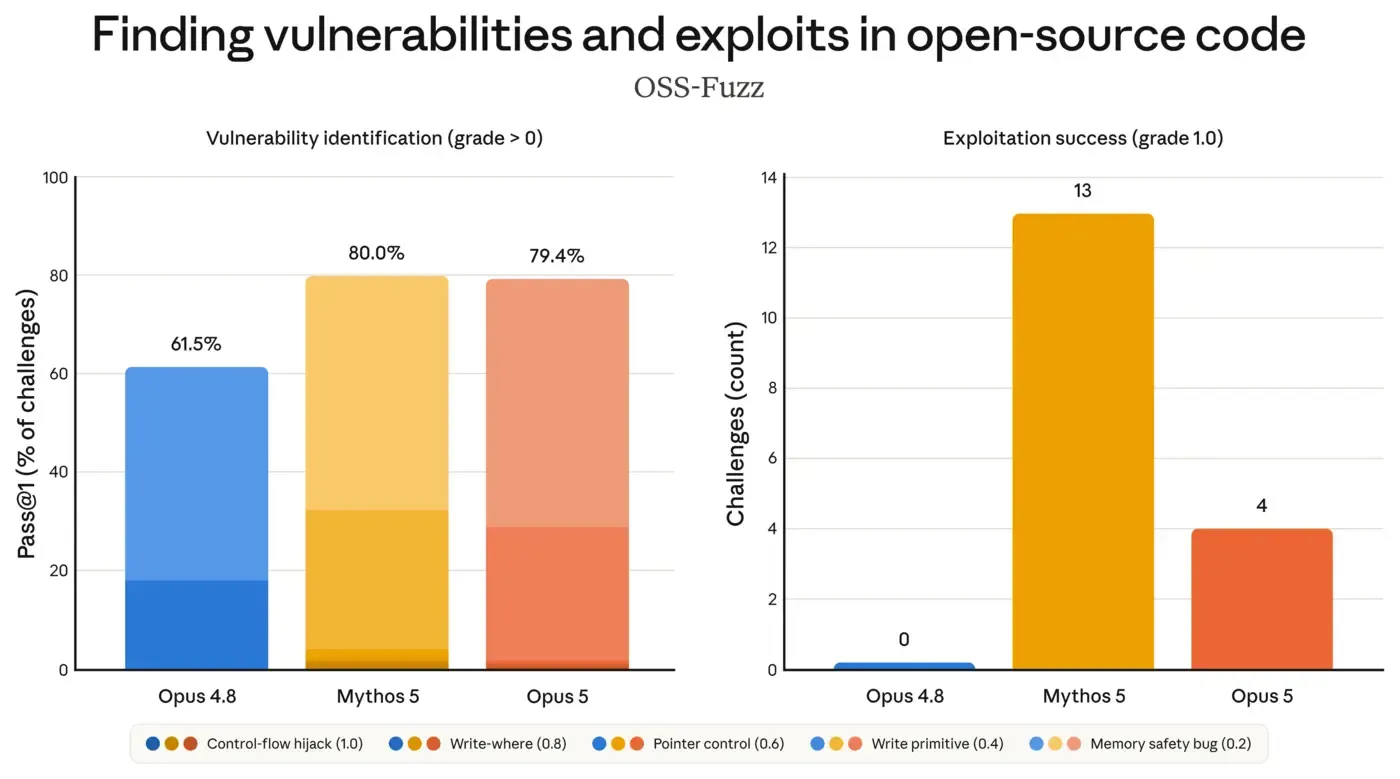
on the security eval it spots a vulnerability in most challenges and carries the chain to a working exploit in a handful. a sibling model spots about as many and finishes three times as often. finding and finishing are separate skills, worth knowing before you hand an agent something unsupervised.
the dial under the number
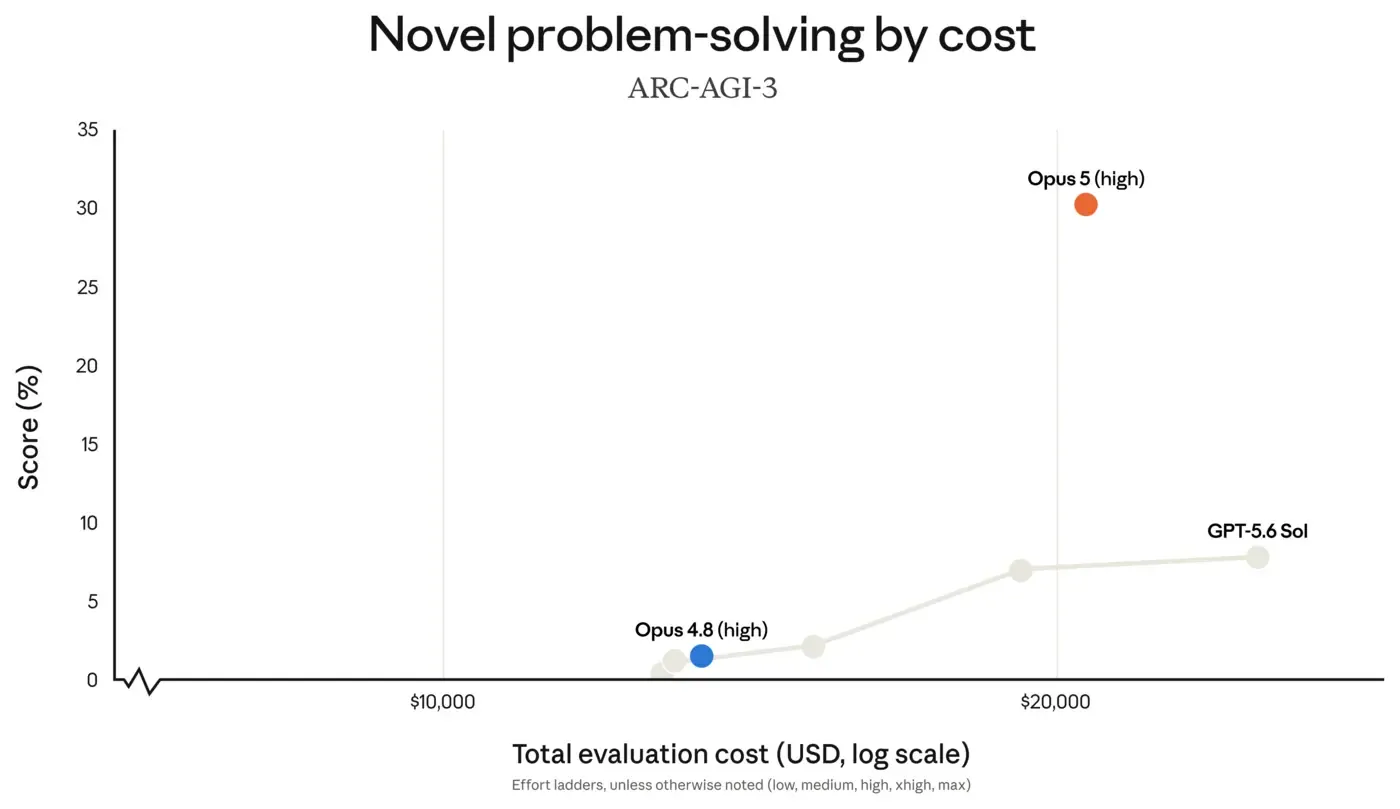
almost every chart plots the same model at different effort levels against cost. one model traces a whole curve, so a headline score is a point somebody picked on that ladder, and where you sit decides most of your bill.
day one, people are moving down it. one reader put medium on the new model level with the old one at max, for a third the cost and twice the speed. another warned that high effort gets hyperfocused on irrelevant details and widens the surface for mistakes.
cost is contested. one commenter cites third-party evals showing it climbing sharply; another’s own benchmark went from 470k tokens and $1.29 to 179k and $0.33. they ran different work at different settings.
how it behaves unattended
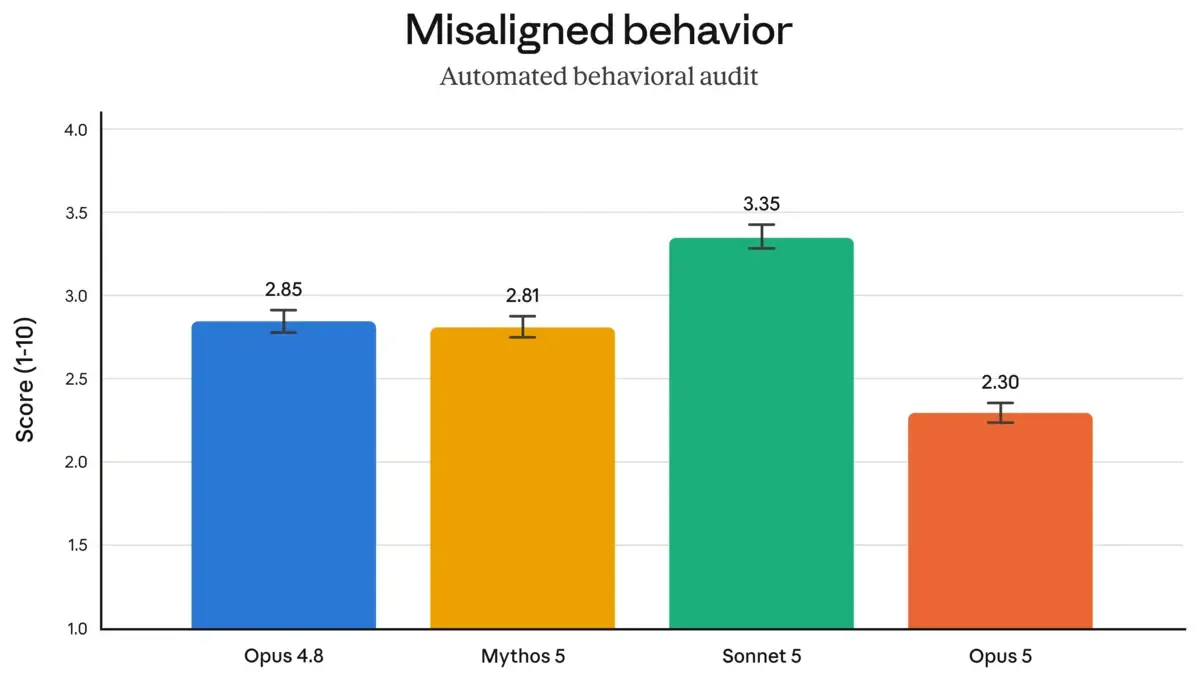
anthropic ran an automated behavioral audit for misaligned behavior, lower being better. opus 5 came in lowest of the four tested.
a footnote in a chat window. for an agent running while you sleep, it’s the column that decides how much rope it gets.
how it landed
warmly, with an asterisk that hasn’t gone away.
the most concrete win anyone posted on day one:
I was working on some Linux kernel code, and Sonnet 5, Opus 4.8 had given up on the problem i was trying to fix (after several hours). Opus 5 was able to triage and fix the issue in under 30 minutes.
the most concrete complaint:
it is a bit of an aggressive over-engineerer. She likes to add some scope, woowee.
the loudest complaint thread isn’t about capability at all. it’s refusals: people trying to run a security review on their own systems and getting knocked back. sit that next to the audit chart above, because it’s the same dial read from the other end. the model that behaves best unattended is also the one more likely to decline the job.
and running under both threads, a suspicion nobody settled: a model that beats the house flagship on paper while the flagship stays the flagship makes people wonder which one got optimised, the model or the benchmark.
the verdict
a real improvement where long work was weakest, cheaper per unit of quality if you stop defaulting to max effort, and still not something to leave alone on a long job. none of that shows up in the ranking.
one thing to try
split the work you repeat weekly into the part that needs judgment and the part that just needs doing. run the second half a notch lower for a week. most people pay top-of-ladder rates for both halves.
which is why 5dive pins a model and an effort level per agent, not per account. your inbox watcher and your refactor agent run on your own box on the settings you chose, and existing agents heal to the current opus nightly. you bring your own Claude credentials, nothing metered or resold.
it’s open source if you want to read how it’s wired: github.com/5dive-ai/5dive
charts from anthropic’s claude opus 5 announcement, july 24 2026. practitioner reports from the launch-day hacker news thread and r/ClaudeCode.